

When people picture a professional food shoot, they often imagine a van full of kit: stands, flags, cables and a bank of lights pointed at a single plate. Ours looks rather different. At Dot Dash Media, everything we shoot is lit by the window that’s already in the room, or by a single light. Here’s why we work that way, and what it looks like behind the scenes on a shoot day.
Why we keep the light simple
A restaurant, bar or hotel has usually put a lot of thought into how it feels. The windows, the warm bulbs over the bar, the candle on the table at nine o’clock: that light is part of the experience your guests pay for. When you flood a room with studio lights, you lose it, and the photos start to look like they could have been taken anywhere.
We’d rather your guests recognise the room the moment they walk in. Simple light keeps the atmosphere, keeps the colours honest and makes the food look the way it actually does when it lands on the table.
Finding the light before we pick up a camera
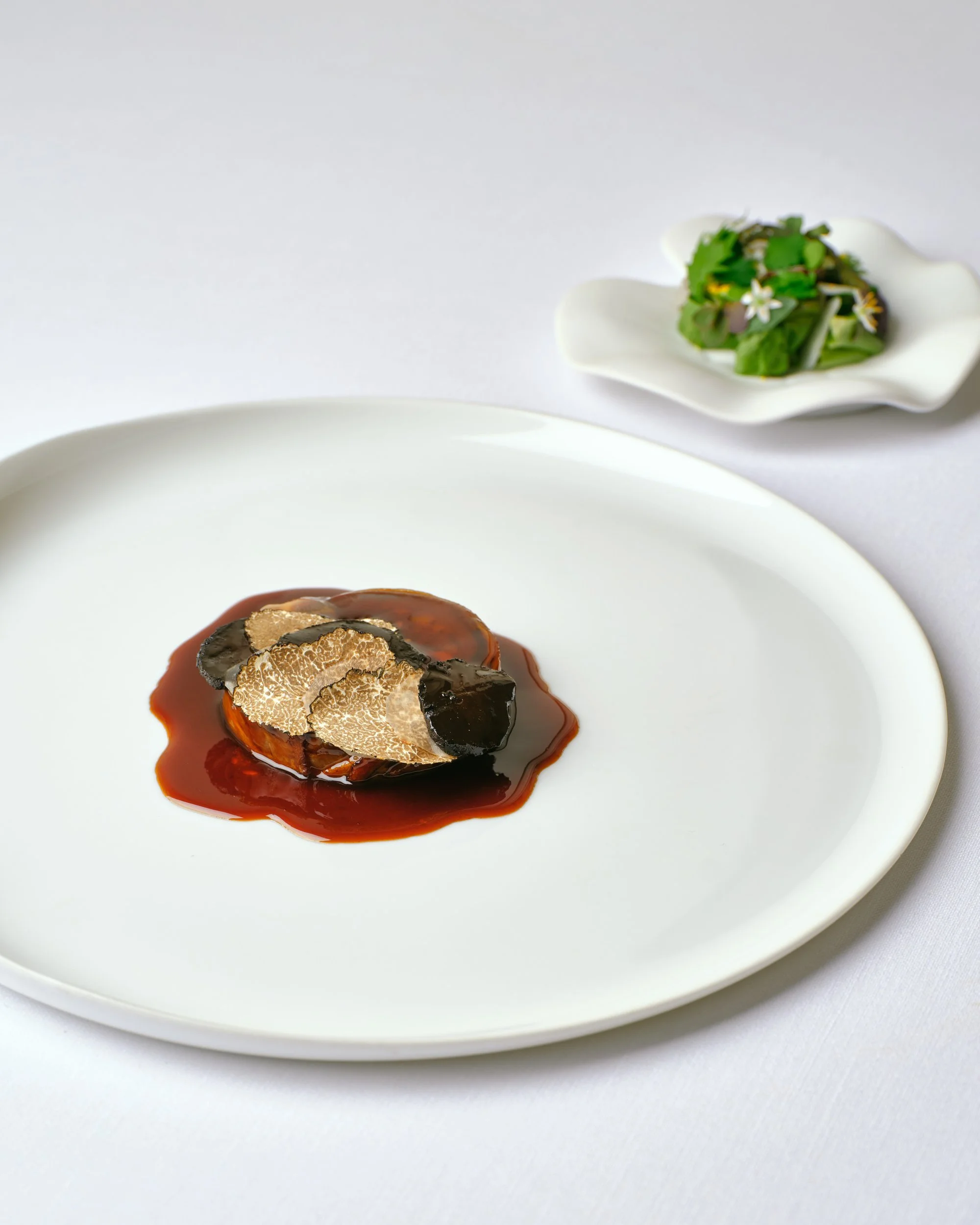
The first thing we do on arrival isn't unpacking. It's walking the room. Which tables catch the window? Where is the light softest? When will the sun move round, and when will it drop? In London, especially through autumn and winter, the light changes quickly, so we plan the day around it.
That usually means building the shot list around the light rather than the other way round. Bright, delicate plates go first while the daylight is at its best. Moodier drinks, bar shots and interiors come later as the light fades. It's a small change in planning that makes a big difference to the final images.
When we bring a light, we bring one
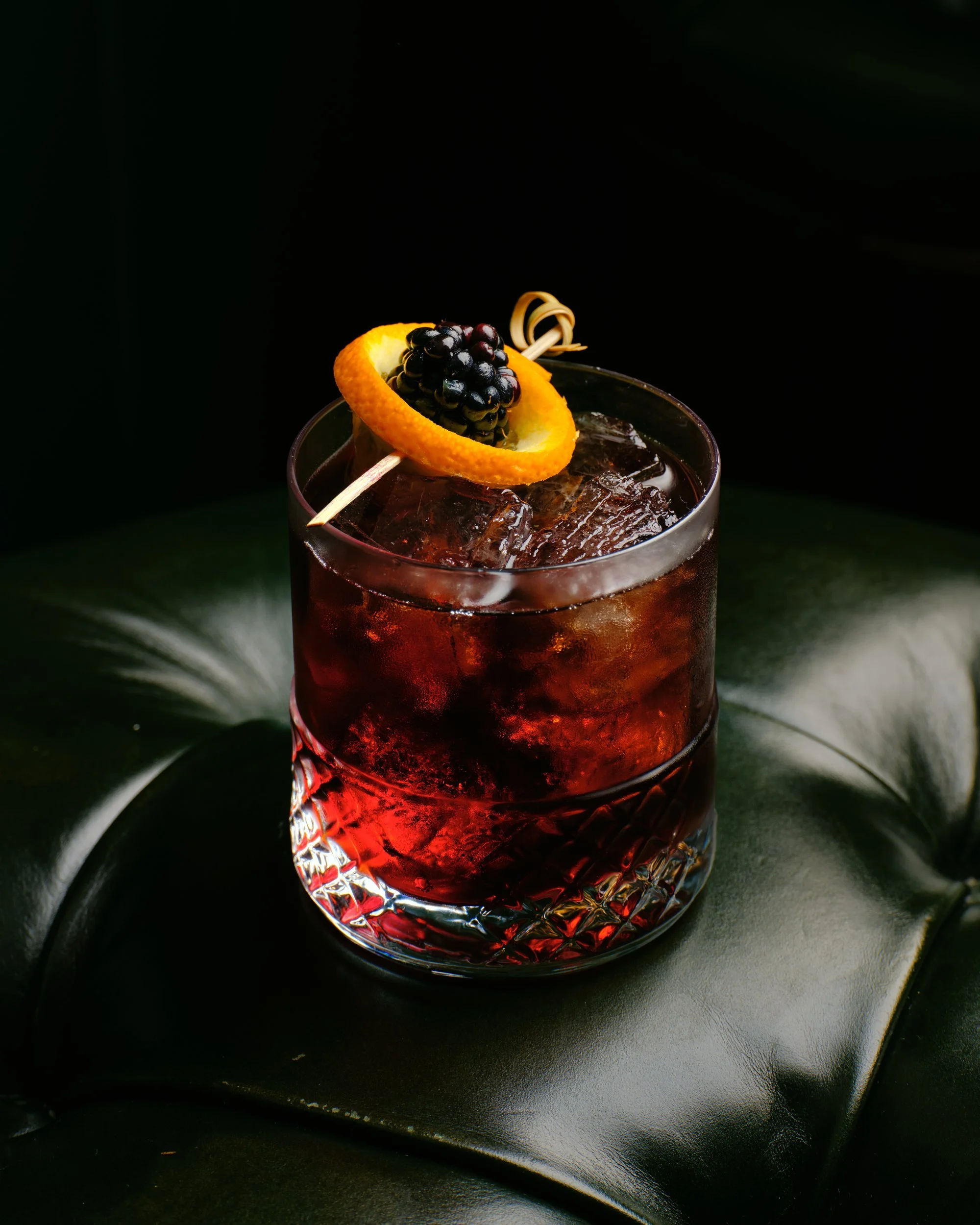
Sometimes the room doesn't give us enough, whether that's a basement bar, a late-afternoon slot or a dining room with no windows at all. Then we bring a light, and only ever the one: a studio flash fired through a softbox.
The softbox turns a hard flash into something that behaves like a big window. It comes from one direction, and we let the rest of the frame fall away naturally. Drinks are a good example: with one softened light and a dark background, the glass, the colour and the garnish do all the talking.
A single flash also gives us control that daylight can't. It doesn't change when a cloud goes over or the sun drops, so a dish shot at eleven in the morning matches one shot at four in the afternoon. Because it's only one light, the set-up stays small enough to tuck into the corner of a dining room.
Shadows are what give food its shape
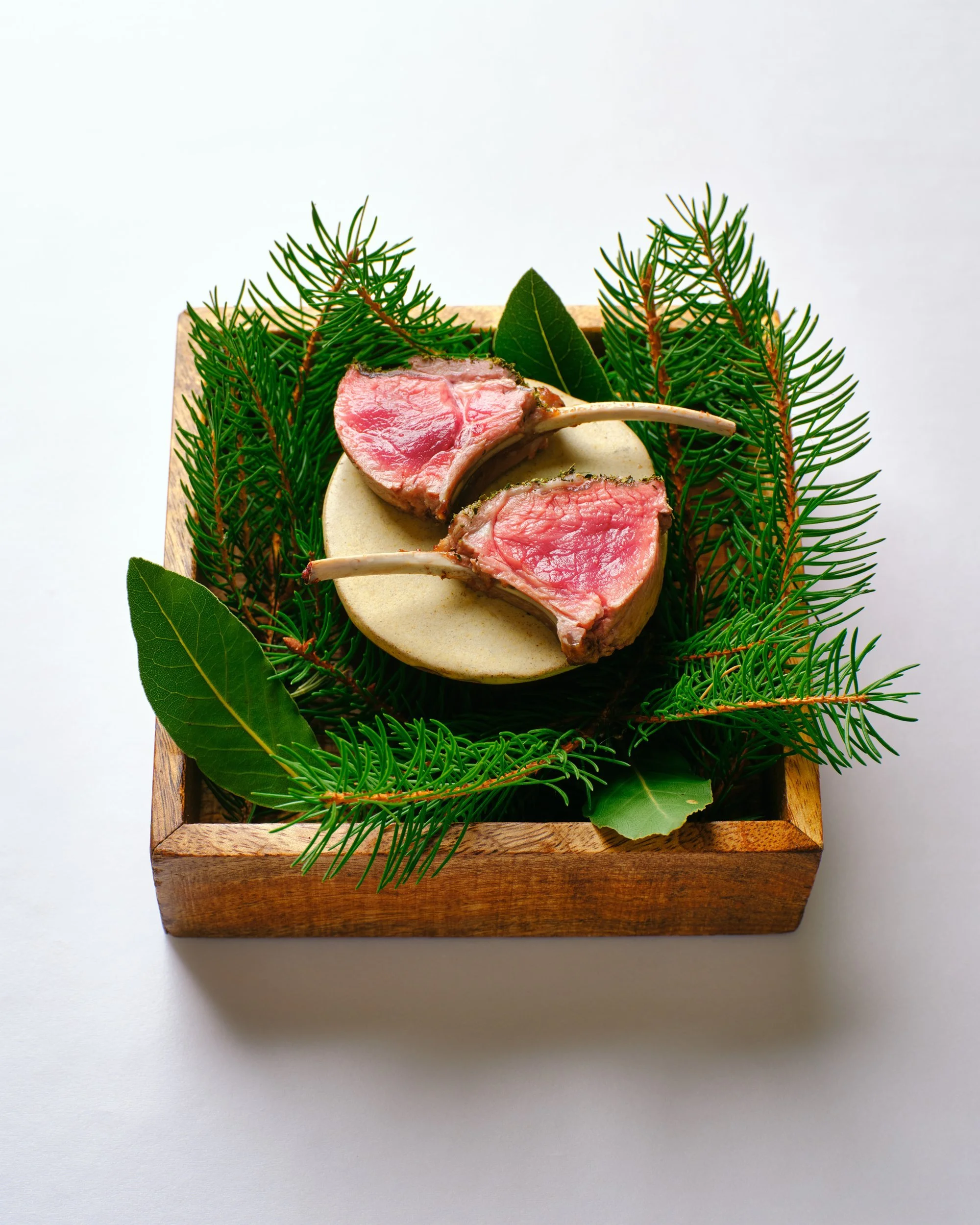
Light from every direction flattens food. Light from one direction gives it texture: the crust on a loaf, the sear on a steak, the gloss on a sauce, the crumb of a cake. Those shadows are what make you want to reach into the picture.
Even on a clean white background, we keep a soft shadow under the plate. It tells you the dish is real and sitting on a table, rather than floating in a catalogue.
Keeping real moments real
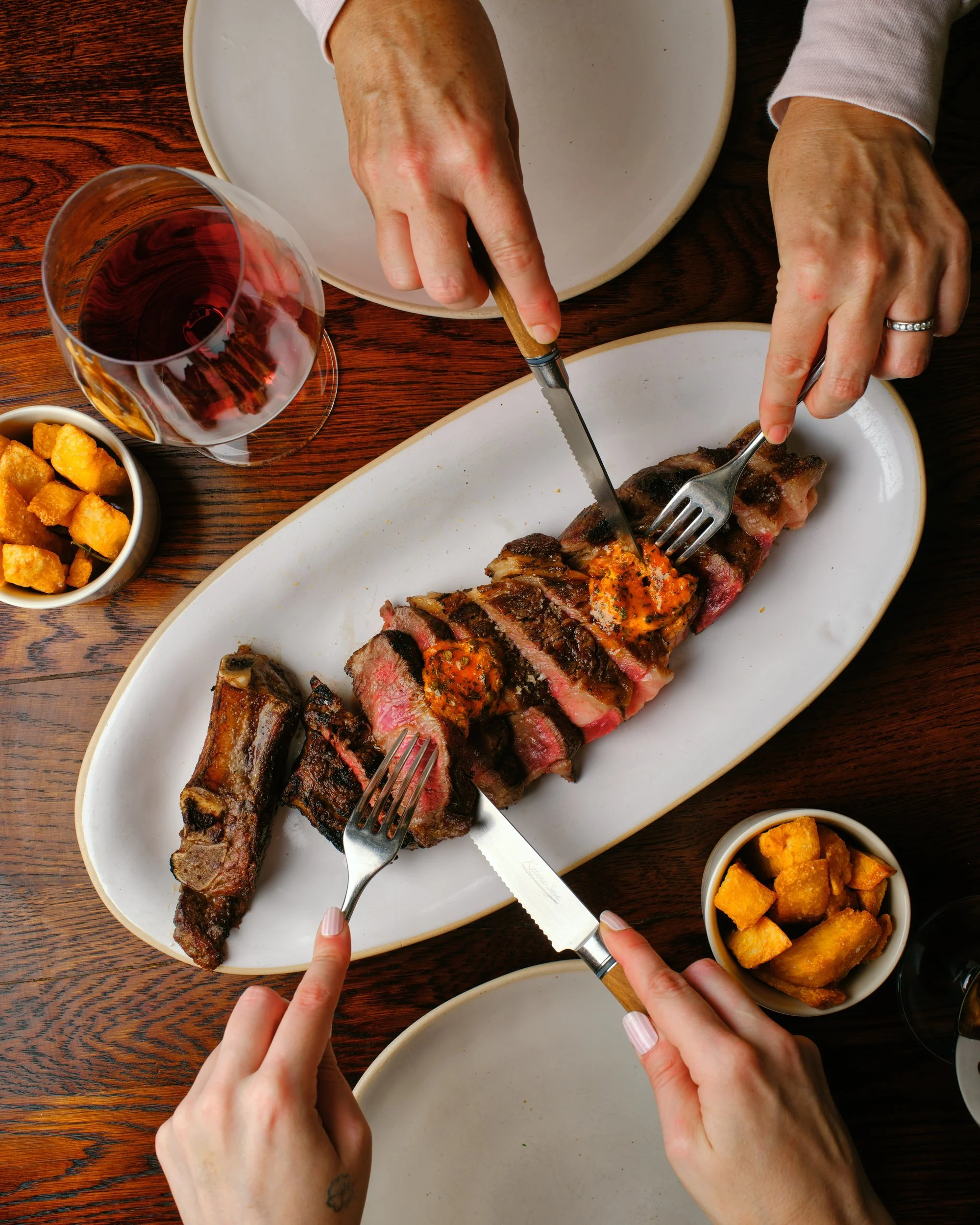
Some of our favourite images aren't of the food on its own, but of the food being enjoyed: hands reaching in, a platter being shared, a glass being topped up. Because we only use one light, set off to the side, there's no wall of kit pointed at the table. People relax, and we can catch those moments as they happen rather than posing them.
The same goes for our video work. We film in real time, using the light the room gives us or a single light, and we don't rely on super slow motion to make things look dramatic. If you'd like to see how that comes together in a finished film, have a look at our post on cinematic food video that actually tells a story.
What this means for your restaurant, bar or hotel
Working simply isn't about cutting corners. It gives you images that feel like your place on a good night, so guests arrive expecting exactly what they get. It means we can work quickly and quietly, often around a live service, without taking over your dining room. And because the look comes from your own space, your photos stay consistent from one month's shoot to the next, across your website, menus and social media.
That consistency is why our hospitality packages pair a monthly shoot with social media management, so every post feels like it belongs to the same story.
Planning a shoot? A few things that help
Tell us where the good light is. You know which tables glow at lunchtime better than anyone.
Think about timing. Morning and early afternoon usually give the best daylight for bright dishes; evening suits drinks, bar shots and atmosphere.
Send dishes out one at a time. Food looks its best in the first few minutes, so a steady flow from the kitchen beats a table full of plates going cold.
Give the windows a clean. It sounds small, but it really does show.
Let's shoot your menu
If you're looking for a London food photographer or restaurant photographer who will capture how your venue really feels, we'd love to hear from you. As a hospitality content studio, we look after everything from a single menu shoot to monthly photo, video and social media packages. Get in touch with Dot Dash Media and let's talk about your next shoot.